Are kids more scared these days… or are we just noticing it more?
It feels like a lot right now. The world is loud, fast, unpredictable, and children are soaking it all in. They hear things we don’t realize they hear, notice changes we think are small, and feel emotions we sometimes push aside. If your child seems scared of everything, the dark, loud noises, shadows, or even being alone, you’re not alone. But here’s the truth: sometimes they’re scared because the world feels big, and sometimes we are too. The goal isn’t to eliminate fear, it’s to understand it.
Is it actually normal for kids to be scared of everything?
Yes, completely. Children’s fears change as they grow, and many of them are developmentally expected. Younger children often fear loud or unfamiliar things, while preschool-aged children may be afraid of imaginary dangers because they’re still learning the difference between real and pretend. As children get older, their fears shift toward more realistic concerns like injury, storms, or family safety. What looks like “random fear” is often just a brain doing exactly what it’s supposed to do, learning, predicting, and trying to stay safe.
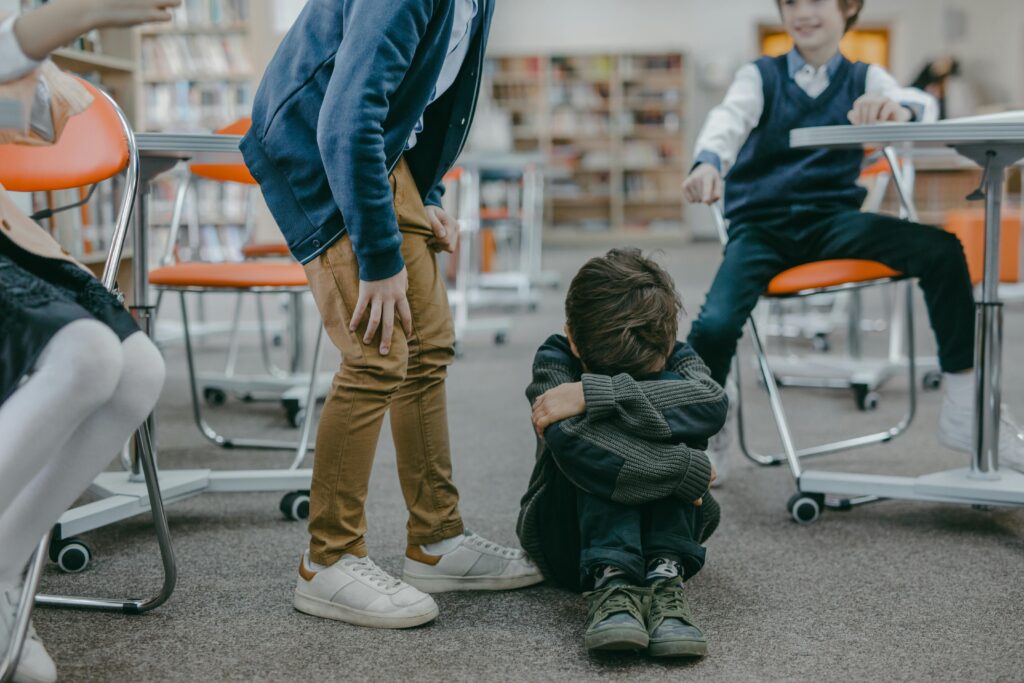
Why does it feel so intense?
Because for your child, it is intense. Children don’t experience fear halfway; it shows up in their whole body. That’s why you might see tears, clinging, freezing, or full meltdowns. Their brain is signaling danger, even when there isn’t one. This is also why logic alone doesn’t work in those moments. Saying “you’re fine” doesn’t land because their body is saying the opposite. Before they can understand, they need to feel safe.
Should I remove everything that scares them?
It’s tempting to do exactly that, and sometimes, in the moment, it’s okay. But over time, completely avoiding fears can unintentionally teach children that those fears are truly dangerous. Research suggests that gentle, gradual exposure helps children build confidence instead. That might look like observing something from a distance, talking about it, or approaching it step by step. The goal is not to force bravery, but to slowly build it.
What actually helps in the moment?
When fear spikes, the most helpful tools are the ones that bring your child back into the present. Sensory grounding works because it shifts attention away from the imagined threat and into the real environment. You might try:
- The 3-3-3 Rule (3 things you see, 3 you hear, 3 you move)
- Belly breathing (slow breaths like blowing out candles)
- The 5-4-3-2-1 method for older children
These tools help calm the body first, because once the body settles, the mind can follow.
What should I say when my child is scared?
How you respond matters more than having the “perfect” words. Instead of dismissing the fear, start by acknowledging it. A simple “I see you’re feeling scared” can go a long way. From there, stay present, calm, and reassuring. Children take emotional cues from you, so even if you’re unsure, modeling steadiness helps them regulate. The goal isn’t to convince them the fear is wrong; it’s to show them they’re not alone in it.
What’s something parents don’t always realize?
Children learn fear not just from experiences, but from observation. They watch how we react to stress, uncertainty, and challenge. If everything feels urgent or overwhelming around them, their nervous system picks up on that. This doesn’t mean you need to be perfectly calm all the time; it just means that your presence, your tone, and your response patterns quietly shape how they learn to handle fear.
The Hoopla Method: A Simple Reset in the Moment
When fear shows up, you don’t need a long script, just a simple rhythm.
Start with Feel It. Help your child notice where the fear is in their body. You might ask, “Is it in your tummy or your chest?” This builds awareness instead of avoidance.
Then Move It. Use a grounding tool like belly breathing, the 3-3-3 rule, or even shaking out their hands and feet. Movement helps release the physical tension of fear.
Finally, Connect. Sit with them, hold their hand, and remind them, “I’m here. You’re safe.” That connection is what tells their nervous system it can settle.
Final thought
Your child being scared of everything doesn’t mean something is wrong. It means their brain is growing, their imagination is active, and their world is expanding faster than they can fully understand. Fear is part of that process. What matters most is not removing every fear, but helping them learn that they can move through it, with you right beside them.
Author
Soyini Alexander
Source: Taming the monsters: Helping kids deal with their fears
In a hard moment right now?
Hoopla's Parent Guides are free guides for parents navigating hard moments. Night wake-ups, public meltdowns, anxious children, distance learning, and more. No app needed, no login.
Need help now: Parent Guides →